


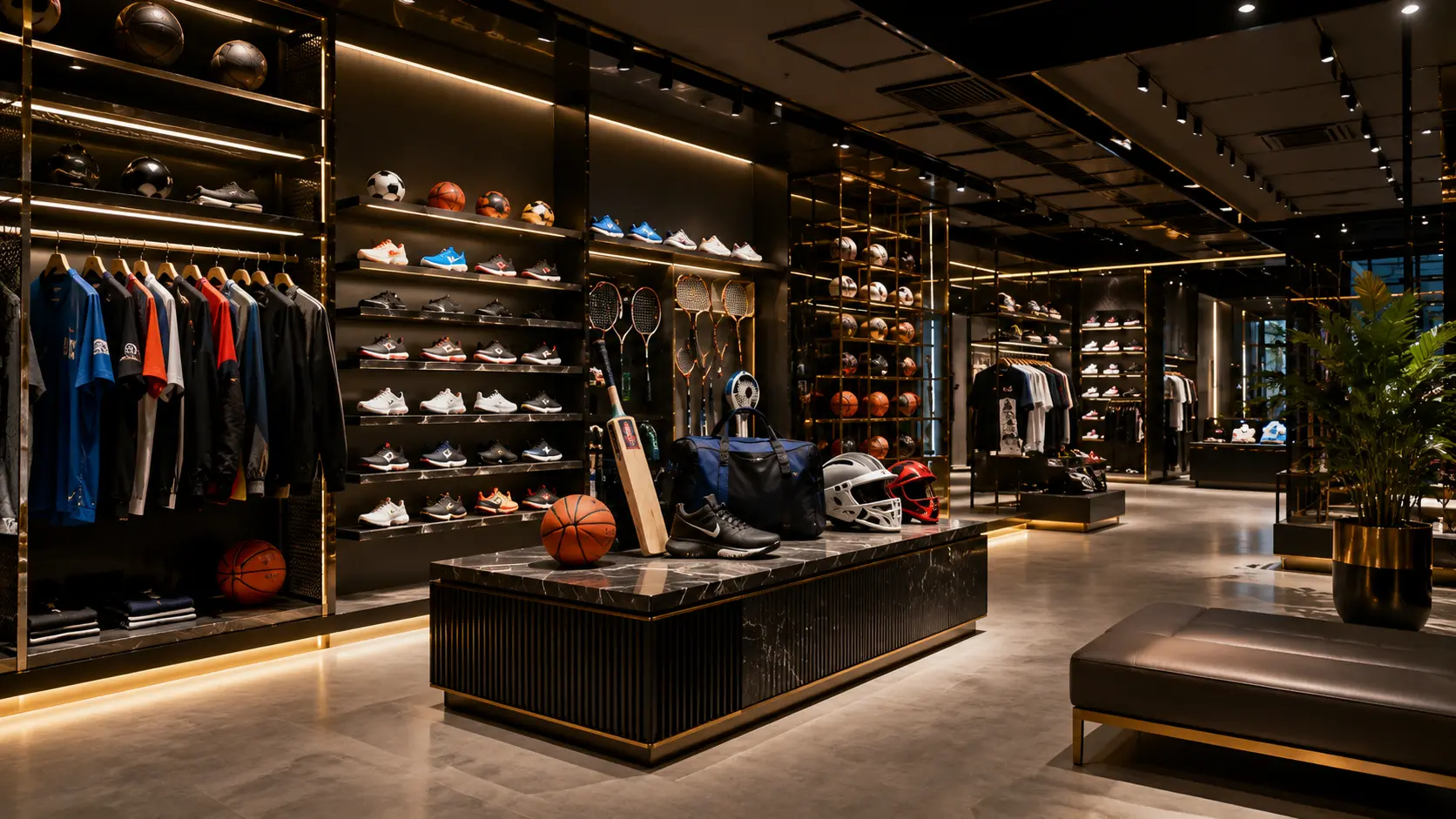
Omnichannel sports retail is not “having a shop and a website.” It is designing one customer experience across discovery, product education, inventory, purchase, delivery, returns and after-sales service. The profitable model connects physical retail strengths—trust, trial and human advice—with digital strengths—search, content, convenience and data.
Why sports retail needs an omnichannel model
Sports customers rarely follow a single path. A runner may discover a shoe on social media, compare specifications on a website, visit a store to test fit, order a different color online and later ask a question through messaging. A club manager may review equipment digitally, request a quotation and complete a bulk purchase through a sales representative. If every channel behaves like a separate business, the customer experiences friction and the company loses data.
Omnichannel design turns these interactions into one connected journey. The goal is not to force every customer online or into a store. It is to let each customer move between channels without losing context, confidence or convenience.
1. Define the customer segments before designing channels
A sports retailer can serve very different buyers: beginners, enthusiasts, professional athletes, parents, coaches, clubs and institutional purchasers. Their questions, basket sizes and decision cycles are different. Segmenting the audience helps decide what the store should demonstrate, what the website should explain and where human consultation adds the most value.
Build a simple segment map
- Primary sports and activity categories
- Skill level and frequency of participation
- Typical budget and purchase frequency
- Main barriers to purchase
- Need for fitting, testing or technical advice
- Likelihood of repeat purchase
- B2C versus B2B requirements
“The channel should disappear from the customer’s mind. What remains is one brand, one inventory promise and one service standard.”
2. Create a product architecture that works in store and online
Weak category structure makes both digital navigation and physical merchandising harder. Products should be organized around how people actually shop: sport, use case, skill level, size, surface, performance need or budget. Internal product data must also be disciplined enough to support filters, comparison, stock control and staff recommendations.
Every important SKU should have reliable data
- Clear product name and variant structure
- Accurate specifications and materials
- Size, compatibility or technical dimensions
- High-quality images from useful angles
- Use-case guidance
- Care and maintenance notes
- Warranty and return information
- Inventory status by location when possible
3. Give the physical store a job the website cannot fully replace
A sports store should not be a warehouse with shelves. It can provide trial, fitting, expert guidance, discovery and community. A small test zone, fitting service, demonstration station or consultation desk can create a reason to visit even when product information is available online.
Merchandising should reduce decision fatigue. Place complementary products together, show clear good-better-best choices, use informative rather than decorative signage and make staff advice consistent with the digital product story.
4. Build the website around decisions, not just product listings
Customers need help choosing. Category introductions, comparison content, buying guides, filters and FAQs can reduce uncertainty. For technical products, richer content can also attract search traffic and improve visibility in AI-assisted discovery because the site answers concrete questions rather than merely repeating manufacturer descriptions.
Useful e-commerce content includes
- Buying guides by sport and user type
- Size and fit guides
- Comparison tables
- “Best for” use-case labels
- Maintenance and setup instructions
- Expert articles linked to relevant products
- Short videos showing real use
5. Treat inventory accuracy as a customer-experience feature
Nothing damages trust faster than showing an available product that cannot actually be delivered. Omnichannel retail depends on accurate stock states, clear allocation rules and realistic fulfillment promises. Even if real-time synchronization is not possible at first, the business needs a defined process for updating stock and resolving conflicts.
Decide how each order can be fulfilled
- Ship from central warehouse
- Ship from store
- Click and collect
- Reserve online and pay in store
- Transfer stock between branches
- Special-order from supplier
6. Design returns and after-sales service before launch
Sports products can involve size changes, technical compatibility issues and warranty questions. Return policy should be visible, understandable and consistent across channels. Staff should be able to see the order context without forcing the customer to retell the entire story.
After-sales service can also become a loyalty tool. Setup support, replacement parts, maintenance reminders and product-care content extend the relationship beyond checkout.
7. Use CRM to recognize the customer across channels
A customer profile is valuable when it improves service, not when it simply collects data. With appropriate consent, the business can use purchase history, preferred categories and interactions to send relevant recommendations, replenishment reminders or invitations rather than generic promotions.
Useful lifecycle messages
- Welcome and first-purchase education
- Post-purchase setup or care guidance
- Replenishment for consumable products
- Relevant new arrivals
- Event and community invitations
- Win-back messages after long inactivity
8. Make content part of the sales system
For sports retail, content is not separate from commerce. A well-written article about choosing equipment can link directly to relevant categories. A comparison can help the customer move from uncertainty to a shortlist. An instructional video can reduce returns by setting correct expectations.
This is especially important for SEO and GEO. Search engines and generative answer systems tend to value clear, structured pages that explain entities, use cases, trade-offs and practical criteria. Original expertise, transparent authorship, strong internal linking and specific answers make a retail site more useful than thin product pages.
9. Align promotions across channels
Conflicting prices and promotions create distrust. That does not mean every channel must always have identical offers, but differences should be deliberate and explainable. A store-only fitting package, an online-only bundle or a loyalty reward can make sense when the value proposition is clear.
Build a promotion calendar that considers stock, seasonality, sports events, school cycles and new-product launches instead of relying on continuous discounting.
10. Measure the whole journey
Channel-level metrics can be misleading. A digital campaign may influence an in-store purchase; a store consultation may lead to an online order. Use measurement that recognizes assisted conversion where possible.
Key metrics to monitor
- Conversion rate by channel
- Average order value
- Gross margin after promotions
- Inventory turnover
- Out-of-stock rate
- Return rate and reason
- Customer acquisition cost
- Repeat purchase rate
- Click-and-collect usage
- Content-assisted conversions
11. B2B sports retail needs a parallel journey
Clubs, schools, gyms and organizations often need quotations, approval, bulk quantities, delivery scheduling and documentation. Trying to force these buyers through a consumer checkout can create friction. A dedicated inquiry and quotation workflow can coexist with standard e-commerce while sharing the same product and inventory data.
12. A practical implementation roadmap
Stage 1: audit
Review channels, customer segments, product data, inventory flow, technology, staff processes and current friction points.
Stage 2: design the target journey
Define how customers discover, evaluate, buy, receive, exchange and return products across channels.
Stage 3: fix the foundation
Improve product data, category structure, stock processes and service standards before adding complex automation.
Stage 4: integrate
Connect website, inventory, CRM, messaging and store workflows based on business priority.
Stage 5: optimize
Use customer feedback and commercial data to improve merchandising, content, fulfillment and lifecycle communication.
Common omnichannel mistakes
- Treating the website as a digital catalog rather than a sales and service channel
- Allowing online and store inventory to contradict each other
- Using different product information in different channels
- Running promotions without margin and stock discipline
- Collecting customer data without useful personalization
- Ignoring B2B purchasing needs
- Measuring channels in isolation
Conclusion: profitable omnichannel retail is operational, not cosmetic
A modern sports retailer wins by connecting product knowledge, inventory, service, content, fulfillment and customer data. The website should make the store stronger, and the store should make digital purchasing more trustworthy. When both operate as one system, the business can improve convenience without sacrificing expertise and can grow without creating unnecessary complexity.
SakooX can help sports businesses structure physical retail, e-commerce, product architecture, customer journeys and related commercial operations as one connected growth system.