


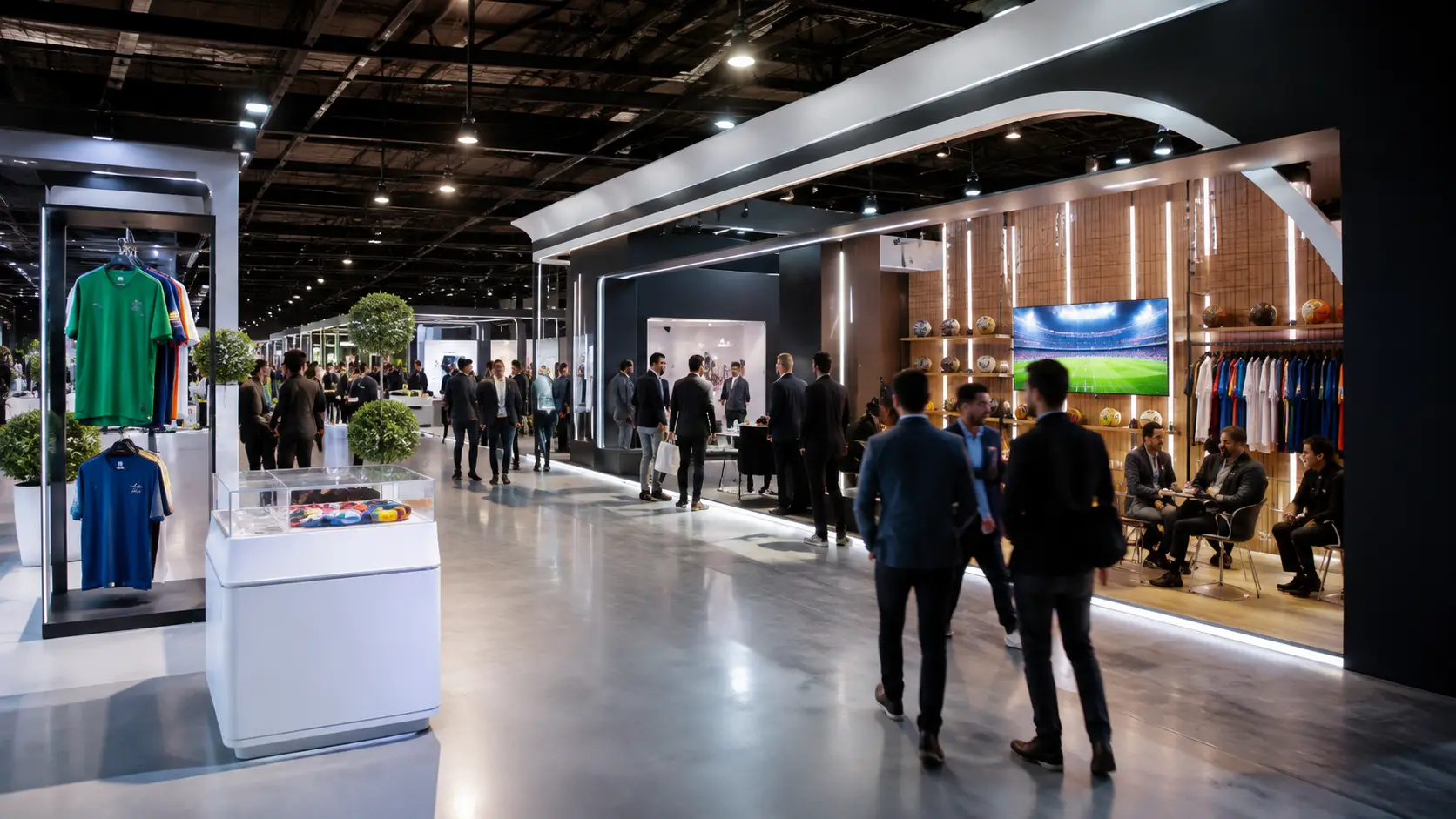
A sports exhibition or event becomes commercially valuable when visibility is converted into qualified conversations, captured leads, scheduled follow-up and measurable opportunities. The event plan should begin with objectives and target accounts, then shape booth design, message hierarchy, demonstrations, staffing, content and post-event sales activity around those goals.
Sports events are not automatically marketing investments
A busy booth can feel successful while producing little business value. Foot traffic, photographs and social reach matter, but they are not substitutes for qualified leads, meetings, partnerships, sales or strategic learning. The strongest event programs connect attention to a defined commercial next step.
This principle applies to trade exhibitions, sports conferences, consumer festivals, product launches, tournaments and institutional events. Each format has a different audience and rhythm, but the planning discipline is similar: know why you are there, who you need to meet and what should happen after the event.
1. Define the event objective before booking space
“Brand awareness” is too broad to guide execution. A useful objective should influence decisions and be measurable. The same company might attend one exhibition to meet distributors and another to launch a product to consumers. Those booths should not look or operate the same.
Possible event objectives
- Generate qualified B2B sales leads
- Meet distributors, suppliers or commercial partners
- Launch or demonstrate a new sports product
- Build relationships with clubs and organizations
- Recruit participants for a new sports experience
- Collect market feedback
- Create high-value photo and video content
- Strengthen credibility in a specific sports category
“The event does not end when the hall closes. Commercially, the event ends when every valuable conversation has been followed up.”
2. Build a target-account and audience list
Do not rely only on whoever walks past the booth. Identify priority organizations, roles and visitor types before the event. If exhibitor or attendee information is available, schedule important meetings in advance. If not, create a practical list of categories you want to reach and train the team to recognize them.
Segment visitors by value and intent
- High-priority decision makers
- Potential partners or distributors
- Qualified end customers
- Media and content creators
- Industry peers and intelligence sources
- General visitors
This segmentation helps staff spend the right amount of time with each conversation and prevents the booth from being dominated by low-priority interactions during peak periods.
3. Design the booth around actions, not decoration
Visual quality matters because it earns attention and communicates professionalism. But the booth should also make the desired action obvious. Do you want visitors to touch a product, watch a demonstration, scan a QR code, book a meeting, request a quotation or sit for a consultation?
A practical booth needs zones
- A high-impact visual entry point
- A clear product or service demonstration area
- A short-conversation zone for qualification
- A quieter meeting area when necessary
- Storage that keeps clutter out of sight
- A lead-capture point integrated into the flow
4. Create a message hierarchy visitors can understand in seconds
Exhibition halls are noisy. Visitors do not read paragraphs from a distance. The top message should explain what you do or why the offer matters in a few seconds. Secondary messages can explain specific capabilities, proof points or categories. Detailed information belongs in conversation, brochures, screens or follow-up material.
A useful hierarchy is: brand promise → problem or opportunity → solution category → proof → call to action. Keep the same language across signage, staff scripts and digital content so the brand does not sound different at every touchpoint.
5. Give visitors something worth stopping for
Sports products and services are often easier to understand through interaction. A controlled demonstration, trial, before-and-after comparison, model, material sample or interactive screen can create the pause needed for a sales conversation.
The activation should relate to the business. A game that attracts a crowd but has no connection to the offer can generate attention without qualification. The best experiences are entertaining enough to invite participation and relevant enough to start the right conversation.
6. Train staff to qualify, not only welcome
Friendly staff are essential, but commercial events need a simple qualification method. The team should know the target visitor, the most important questions and when to hand a conversation to a technical or commercial specialist.
A short qualification flow can ask
- What type of organization or project are you involved in?
- What are you currently trying to build, buy or improve?
- What is the approximate timing?
- Who else is involved in the decision?
- What follow-up would be most useful?
Do not turn the booth into an interrogation. The purpose is to understand relevance and capture enough context for a useful next step.
7. Capture leads with context
A list of phone numbers is not a lead system. Each record should capture the person, organization, area of interest, urgency, conversation notes and agreed follow-up. This can be done through a CRM form, tablet, QR workflow or a disciplined manual process.
Minimum useful lead fields
- Name and role
- Organization
- Contact details
- Interest category
- Project or need summary
- Priority level
- Owner inside your team
- Next action and date
8. Plan content production before the doors open
Events offer rare access to products, customers, experts and industry atmosphere in one place. Without a shot list and responsibilities, teams often return with random footage that is hard to use. Plan hero photography, short interviews, demonstrations, behind-the-scenes clips, customer questions and recap content in advance.
Capture formats for both immediate social publishing and long-term website use. Good event content can support case studies, service pages, recruitment, sales presentations and future event promotion.
9. Use appointments to protect high-value conversations
Some of the best event value can be created before the event. Invite strategic prospects, partners and existing customers to pre-book short meetings. A simple calendar reduces dependence on chance and gives the team a predictable pipeline of important conversations.
Leave open capacity too. Overbooking every minute can make the booth inaccessible to valuable unexpected visitors.
10. Build a follow-up system before the event
If the follow-up process is invented after everyone returns to the office, momentum is lost. Define lead categories, owners, message templates and service-level targets in advance. High-priority leads may need same-day or next-day contact, while general visitors can enter a slower nurture flow.
Follow-up should be specific
- Reference the actual conversation
- Send the promised document or link
- Propose a concrete next step
- Assign an internal owner
- Record the opportunity in CRM
- Schedule a second follow-up when necessary
11. Measure commercial outcomes, not vanity alone
Reach, impressions and visitor counts are useful context but should sit beside business metrics. The event report should help decide whether to repeat, change or stop the investment.
Useful event KPIs
- Qualified leads captured
- Meetings held
- Cost per qualified lead
- Opportunities created
- Pipeline value influenced
- Partnership conversations opened
- Sales attributable to the event
- Content assets produced
- Customer and market insights collected
12. Think beyond the booth
Sponsorships, speaking slots, workshops, demonstrations, media interviews and hosted side-events can sometimes create more strategic value than additional booth area. Choose the mix that matches the objective rather than automatically buying the largest space available.
13. Localize the experience for the market
In Iran or any local market, audience expectations, business etiquette, language, payment realities, logistics and venue constraints affect event design. Product examples, pricing discussions and calls to action should match how buyers actually operate in that context. A polished international visual language can coexist with locally practical sales processes.
14. Build a post-event review loop
Within one or two weeks, gather sales, marketing and operations to review what happened. Which messages attracted the right people? Which questions repeated? Which products created real interest? Where did the team lose time? Which lead sources converted? Capture these lessons before memory fades and use them in the next event.
Common event mistakes
- Booking space without a measurable objective
- Designing for appearance but not visitor flow
- Using too many messages
- Failing to qualify visitors
- Capturing contact information without conversation notes
- Waiting too long to follow up
- Producing content without a shot plan
- Reporting only foot traffic and social reach
Conclusion: turn attention into a managed commercial process
A strong sports event strategy links objective, audience, design, message, demonstration, staffing, lead capture, content, follow-up and measurement. The goal is not simply to “be present.” It is to create a controlled environment where valuable people can understand the offer, experience the brand and move into a meaningful next step.
SakooX can support sports exhibitions and events through concept development, visual and experience planning, commercial preparation, content structure and post-event activation—helping turn visibility into relationships and opportunities.